
Below are several books related to outdoor properties by the publisher, Human Kinetics The first book is written by Wynne, the president of Lodgepole by Callippe Solutions. All books are available to order online directly from the publisher.
|
|
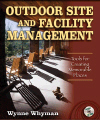
Whyman, W. 2008. This educational book teaches the system of property management, which is a combined effort by all departments. The eleven chapters describe the nuts and bolts for managing a property, beginning with the mission and ending with the risk management. It is a comprehensive, educational book for facility staff, and equally important, board members, management, and owners charged with the complex and challenging task of managing and maintaining properties. Outdoor Site and Facility Management: Tools for Creating Memorable Places will help you to provide the safe environment and positive atmosphere so important to creating memorable experiences for your participants. A bound-in CD-ROM provides 48 editable forms and checklists that you can customize in the management and organization of your property, editable job descriptions, and a combined, comprehensive list of hundreds of books, articles, and online resources to easily find specialized information and local contacts. 232 pp. © 2008. Chapters
On the publisher's web site below, there are 1) Three online book excerpts and 2) extensive book outline. Order the book through the Internet: What people are saying about the book
|
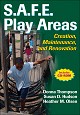 |
Thompson, D, S. Hudson, and H. Olsen. 2007. S.A.F.E. Play Areas - Creation, Maintenance, and Renovation. A resource for facility managers, administrators, and play supervisors in any playground or play area. This all-in-one guide explores the four components of the thoroughly tested, easy-to-implement S.A.F.E. model (Supervision, Age-appropriate design, Fall surfacing, and Equipment) |

Click the hyperlink below to see the selection of books
Climbing Walls
Water Skills, Management, and Activities
Outdoor Skills, Outdoor Education, and Adventure Education
Games, Team Building, and Activities
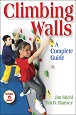 |
Stiehl, J. and T. Ramsey. 2005. Climbing Walls - A Complete Guide. The complete guide for instructors, administrators, and anyone responsible for supervising an indoor climbing wall in their recreation center, school or university, camp, or community setting. |
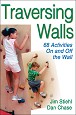 |
Stiehl, J. and D. Chase. 2008. Traversing Walls provides you with 68 engaging activities that you can use to implement traverse wall climbing. The authors provide numerous suggestions for expanding on the games and ideas presented in the book, too. In fact, virtually any intellectual ability, academic task, popular game, or equipment can be incorporated into climbing activities, and many teachers have combined the activities with other subject matter, such as math and geography. |
Water Skills, Management, and Activities Books
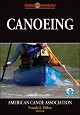 |
American Canoe Association, 2008. In Canoeing, the expert instructors from the American Canoe Association provide you with The book also includes the Quickstart Your Canoe DVD. This instructional DVD guides you through an introduction to paddle sports and basic safety and paddling techniques so you can enjoy a safe boating experience. It contains videos of the essential skills and techniques of canoeing, making it easier than ever to learn the basics. |
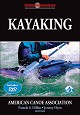 |
American Canoe Association, October 2008. Kayaking. Embrace the outdoors by becoming one of the 17 million people who participate in kayaking, one of the fastest-growing outdoor activities around. Kayaking presents the basics of the sport as well as the skills and knowledge required for becoming a successful paddler with: |
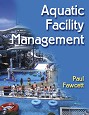 |
Fawcett, P.
2005. Aquatic
Facility Management. Provides current and future
aquatics professionals with a complete guide to running aquatics
programs safely and effectively. This practical reference covers
everything an aquatics director needs, including detailed information
on • directing, promoting, and evaluating programs; • administering a budget and developing staff; • overseeing all aspects of lifeguarding and safety systems; and • managing risks, water chemistry and filtration systems, and facility operations. |
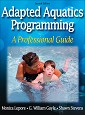 |
Lepore, M., Gayle, G., and S. Stevens. 2007. The second edition of Adapted Aquatics Programming: A Professional Guide is packed with new material, including up-to-date information on relevant legislation, guidelines on architectural accessibility, instructional strategies, equipment, safety management, and competitive and recreational aquatics activities. |
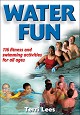 |
Lees, T. 2007. Water Fun - 116 fitness and swimming activities for all ages. A popular activity for both fun and fitness, swimming is now easier to learn, enjoy, and use as exercise with Water Fun. Including more than 100 stunts, skills, games, and workouts that may be tailored to meet specific needs, this book has something for every age and skill level. With a complete collection of individual and group activities that require little, if any, equipment, Water Fun has everything water exercisers need to become more comfortable and skilled in the water. |
Outdoor Skills, Outdoor Education, and Adventure Education Books
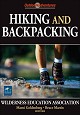 |
Wilderness Education Association, 2008. Hiking and Backpacking. Master teachers take you step by step through the preparation, skills, and techniques you need to know for a successful adventure. They provide you with practical tips in all these areas, and they also supply you with Web addresses to help you plan your hiking and backpacking adventures throughout the world. This practical book presents all the essential information you need for hiking, overnight camping, and backpacking. |
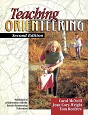 |
Carol McNeill, C., Cory-Wright, J. and T. Renfrew. 1998. Teaching Orienteering (Second Edition) makes it easier than ever for busy teachers, leaders, and coaches to introduce orienteering skills and techniques to students of the sport. This new edition retains the highly visual, full-color format of the original version, but its content has been expanded and completely updated. |
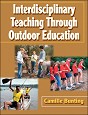 |
Bunting, C. 2006. Interdisciplinary Teaching Through Outdoor Education provides teachers and recreation and outdoor leaders with outdoor activities as well as the expertise to expand students’ understanding of the outdoors and develop their character. Units are included for challenge initiatives that don’t require a ropes course, frontcountry camping, backcountry camping, outdoor cooking techniques, land navigation, casting and angling, and archery. Also discussed are rock climbing and canoeing and kayaking. |
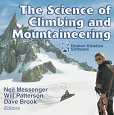 |
Messenger, N., Patterson, W., and D. Brook. 2000. The Science of Climbing and Mountaineering CD. The text highlights three key topics within this range of disciplines. The physiological dimensions of climbing are examined in chapters that report how the human body reacts to the rigors of climbing. Also covered are the techniques and biomechanics of climbing and the equipment, from ropes and helmets to textiles and clothing, required to make climbing safer and more comfortable. |
 |
Gilbertson, K, Bates, T., McLaughlin, T. and A. Ewert. 2006. Outdoor Education: Methods and Strategies provides all the necessary information and tools for teaching outdoor education. It applies educational theories to outdoor teaching methods and helps educators choose the instructional strategy that will work best for their audience, whether they’re in a school, nature center, adventure center, camp, environmental learning center, government agency, or university with: |
 |
Project Adventure, Inc. 2007. Adventure Education: Theory and Applications allows students to:
|

 |
Rouse. P. 2004. Nothing sparks a child’s or adolescent’s interest like a new game! Adapted Games & Activities: From Tag to Team Building provides a wealth of games to get your students and participants moving and having fun, regardless of their cognitive or physical ability levels. By offering exciting activities that entice your students to participate, you’ll not only help them reap the enormous physical benefits of exercise, but you’ll also provide opportunities for them to learn to share, express feelings, set goals, and function independently. The activities in this book have been proven to work in the real world of school and recreation settings. |
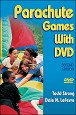 |
Strong, T. and LeFevre, D.N. 2006. The best-selling Parachute Games with DVD is now revised, extended, and packaged with a DVD you can use to preview selected activities before leading them—and let your participants preview it as well so they can see how much fun parachute games are. This new edition includes parachute care and age-appropriate uses and 59 revised and new games, plus dozens of new variations of games from the first edition |
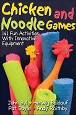 |
Byl, J. Baldauf, H., Doyle, P. and A. Raithby. 2007. Chicken and Noodle Games: 141 Fun Activities With Innovative Equipment is your ticket to promoting fun and active participation for all involved. The games use easy-to-find equipment in nontraditional ways—which means no player will start with an advantage. In addition, the equipment is inexpensive and allows you to provide a diverse selection of innovative games for very little money. The unusual equipment will capture participants’ interests, and the fun games in this book will keep them coming back for more. And some games call for no equipment at all. The games require little organization and provide great opportunities to include children of all ages and abilities. |
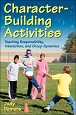 |
Demers, J. 2008. Character-Building Activities: Teaching Responsibility, Interaction, and Group Dynamics The self-responsibility, social interaction, and group dynamics involved in this book’s activities will help kids grow and mature. It applies directly to preteens and teenagers, but it is easily adapted to younger children. The activities are short, clearly described, easy to set up, and ready to use. Regardless of age and setting, the participants in these activities will learn to deal with a variety of issues, including self-esteem, peer pressure, bullies, anger, and stress. They will also acquire self-reflection skills and have opportunities to share their values and listen to other kids as they share theirs. |
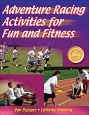 |
DeJager, D. and C. Himberg. 2008. Adventure Racing Activities for Fun and Fitness: A CORE Experience. Adventure racing is a sport that combines two or more disciplines and emphasizes teamwork—in fact, the CORE in the book’s title stands for cooperative obstacle racing experience. In adventure races, teammates work together to finish an obstacle course as quickly as possible.
It provide everything you need to know to prepare for and teach adventure racing: • complete instructions for setting up an adventure racing unit or event, • forms and checklists to help you organize and conduct an adventure race, and • suggestions and options for customizing the activities to suit your needs. |
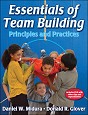 |
D. Midura and D. Glover. 2005. Team building is a proven approach for helping people become respectful competitors, cooperative team members, and community leaders. Essentials of Team Building: Principles and Practices includes 58 activities and challenges for beginning through advanced teams and a bound-in DVD with video clips of 25 challenge demonstrations and reproducible challenge and organizer cards. |
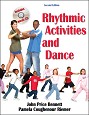 |
J. Bennett and P. Riemer. 2006. Rhythmic Activities and Dance, Second Edition, is a collection of some of the most popular recreational dance forms, geared for teachers of K-12 students and for recreation directors and leaders who want to teach easy rhythms and dances for fun and fitness. The book organization moves from easy rhythmic games and activities to specific dances, including line dances, folk dances, mixers, square dances, and social dances. It includes a new chapter on social dance, focusing on basic rhythmic patterns and introductory steps to help students learn how to waltz, foxtrot, tango, merengue, salsa or mambo, rumba, and swing. |
 |
Walters, P. and J. Byl. 2008. Christian Paths to Health and Wellness. The book focuses on four major themes: how we are made, how we are made to move, how we are to be nourished, and how we are to behave in restful ways. In part I, students are introduced to biblical reasons to value their wellness and examine God’s purpose and their own life’s mission. They explore body image, eating disorders, and weight management in part II. In part III, students learn about the basics of fitness, including cardiorespiratory, muscular, and flexibility assessment and training. Part IV focuses on nutritional and emotional health and wellness and also looks at wellness as it relates to sleep habits and personal relationships. Part V encourages students to develop a comprehensive strategy to maintain personal wellness in a relationship with God. |
